

Engine oil is a crucial component for the proper functioning and longevity of your vehicle’s engine. It plays multiple roles, including lubrication, cooling, cleaning, and protecting engine parts from wear and corrosion. In this comprehensive guide, we will explore the different types of engine oil, their benefits, and how to choose the right one for your vehicle. Whether you’re a car enthusiast or a regular driver, understanding engine oil can help you maintain your vehicle’s performance and extend its lifespan.
Engine oil, also known as motor oil, is a lubricant used in internal combustion engines to reduce friction between moving parts. It forms a thin film on engine components, ensuring smooth operation and preventing metal-to-metal contact that can cause damage. Engine oil also helps in cooling the engine by dissipating heat, keeping the engine clean by trapping dirt and debris, and protecting against rust and corrosion.
Various types of engine oils exist, each with its own advantages, disadvantages, and specific applications. They include:
Mineral oil is derived from refined crude oil and is suitable for older engines or those with lower performance requirements. It provides basic lubrication but may need more frequent changes compared to synthetic oils.
Synthetic oil is chemically engineered to provide superior performance and protection. It offers better viscosity, reduced friction, and enhanced stability at high temperatures. This type of oil is ideal for modern, high-performance engines and can extend the interval between oil changes.
Semi-synthetic oil, a blend of mineral and synthetic oils, offers a balance between cost and performance. It provides better protection and efficiency than mineral oil while being more affordable than full synthetic oil.
Engine oil, as a vital component of engine power and longevity, plays a crucial role; however, incorporating various additives into it can enhance its performance and longevity. Each of the additives present in engine oil has specific and vital functions for maintaining the engine’s performance and health, which we will discuss here.
Oxidation Inhibitor Additives: These additives slow down the natural oxidation process of engine oil, extending its lifespan and maintaining lubrication efficiency.
Detergent Additives: Designed to cleanse engine surfaces, detergent additives effectively remove deposits and micro particles accumulated during vehicle operation.
Dispersant Additives: By keeping deposits and impurities suspended in the oil, dispersant additives prevent buildup on engine components and facilitate their removal by the oil filter.
Antifoam Additives: Preventing foam formation on the oil surface, antifoam additives ensure consistent lubrication and prevent interference with engine performance.
Anti-Wear Additives: Functioning as friction modifiers, anti-wear additives create a protective layer upon engine startup, minimizing friction between moving parts and enhancing engine longevity.
Corrosion Inhibitor Additives: These additives shield engine metal parts from corrosion, safeguarding their integrity and longevity.
Viscosity Index Modifiers: By reducing viscosity discrepancies between cold and hot oil, viscosity index modifiers ensure stable lubrication performance across a wide range of temperatures.
Antifreeze Additives: Enhancing oil fluidity in cold conditions, antifreeze additives adjust the hardening temperature of engine oils, ensuring smooth engine operation even in low temperatures.

Choosing the appropriate engine oil for your vehicle can have several benefits:
Using the correct engine oil as recommended by the vehicle manufacturer is essential for maintaining optimal engine performance, longevity, and reliability. We will discuss the methods for selecting the appropriate engine oil:
The best source of information is your vehicle’s owner’s manual. It provides the manufacturer’s recommendations for oil type, viscosity, and change intervals.
Viscosity ratings, such as 10W-30 or 5W-40, indicate the oil’s thickness at different temperatures. The first number (with a “W” for winter) shows the oil’s flow at low temperatures, while the second number indicates its viscosity at high temperatures. Choose an oil with a viscosity rating suitable for your climate and driving conditions.
Certified engine oils meet specific performance standards set by organizations like the American Petroleum Institute (API) and the European Automobile Manufacturers Association (ACEA). Look for these certifications on the oil packaging to ensure quality.
Your driving habits and conditions also influence the choice of engine oil. For example, if you drive in extreme temperatures, tow heavy loads, or drive in stop-and-go traffic, you might need an oil that offers higher performance and protection.

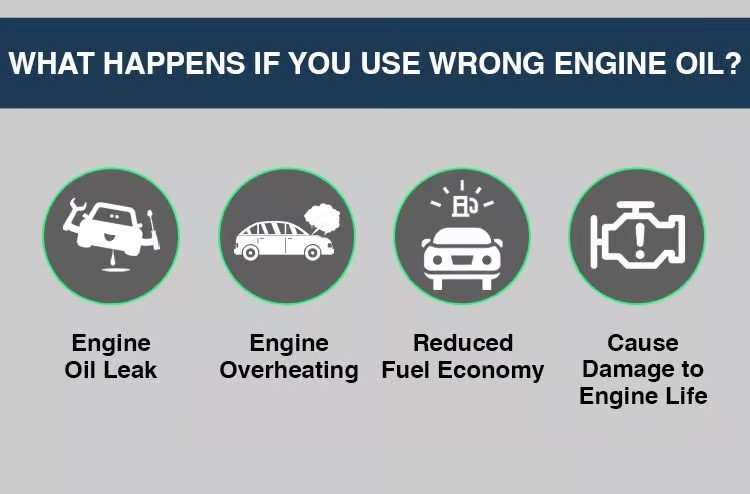
Using the wrong engine oil can have several negative consequences for your vehicle’s performance, longevity, and overall health. Here are some potential issues that may arise:
Different engines require specific types of oil with particular viscosity and additives to ensure proper lubrication. Using the wrong oil may result in inadequate lubrication, leading to increased friction and wear on engine components. This can ultimately lead to premature engine failure.
Engine oils are formulated to meet certain standards and viscosity grades, which can affect fuel efficiency. Using the wrong oil may increase internal friction and reduce engine efficiency, leading to higher fuel consumption and increased costs over time.
Engine oils contain detergents and dispersants that help keep internal engine components clean by preventing the buildup of sludge, varnish, and deposits. Using the wrong oil may not provide adequate cleaning properties, resulting in the accumulation of harmful deposits that can hinder engine performance and efficiency.
Engine oils play a crucial role in dissipating heat generated during engine operation. Using the wrong oil, especially one with an incorrect viscosity grade, can impede heat transfer and cooling, leading to overheating and potential damage to engine components.
Different engine oils have specific chemical compositions that can affect the integrity of seals and gaskets. Using the wrong oil may cause seals and gaskets to swell, shrink, or degrade prematurely, resulting in oil leaks and potential engine damage.
Some modern engine oils are designed to be compatible with emissions control systems, such as catalytic converters. Using the wrong oil may lead to increased emissions, premature degradation of the catalytic converter, and potential failure to meet emissions standards.
Using the wrong engine oil may void your vehicle’s warranty, as manufacturers typically recommend specific oil types and viscosities to ensure optimal engine performance and longevity. Using non-recommended oils could result in denied warranty claims for engine-related issues.
In conclusion, understanding engine oil and its additives is essential for maintaining the performance and longevity of your vehicle’s engine. Engine oil serves multiple functions, including lubrication, cooling, cleaning, and protection against wear and corrosion. The additives present in engine oil play a crucial role in enhancing its performance and durability.
By choosing the right engine oil, you can improve your vehicle’s engine performance, extend its lifespan, and ensure optimal reliability. Factors such as oil type, viscosity ratings, certification standards, and driving conditions should be considered when selecting engine oil.
Using the correct engine oil, as recommended by the manufacturer, is paramount to avoid potential issues such as poor lubrication, reduced fuel efficiency, increased engine deposits, overheating, seal and gasket damage, catalytic converter damage, and warranty voidance.
Ultimately, investing in the right engine oil and following proper maintenance practices can help you maximize your vehicle’s performance, efficiency, and longevity, providing you with a smoother and more enjoyable driving experience for years to come


